
Start right away with the flexible program · Flexible payment plans
Professional training in Arabic
IBA® Requirements Completion Program for QASP-S Holders
90 training hours
A qualification program taught in Arabic for holders of the QASP-S credential who want to advance to the International Behavior Analyst IBA credential.
Explore our packages – starting from $450
Flexible learning that suits your experience and commitments
The program combines recorded learning content, applications and assignments, and live review sessions, so you can progress along the path that best fits your experience while keeping the same content, training hours, learning outcomes, and assessment and completion requirements.
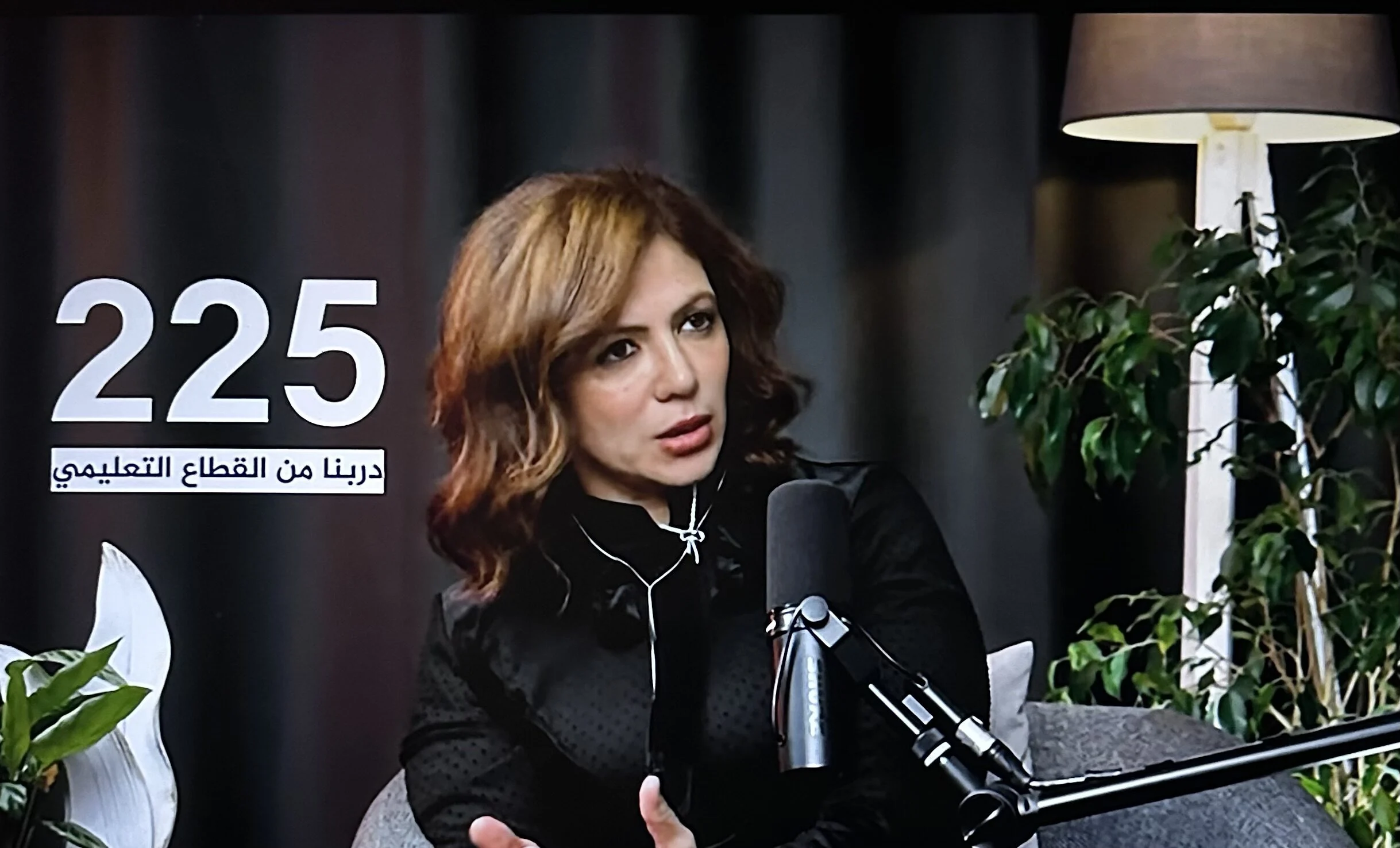
Trainer & Professional Supervisor
Why train with Dr. Mayada specifically?
Because moving to the IBA® level isn’t just about adding new information; it’s about deepening your analysis, linking data to professional decisions, and developing your capacity for clinical and behavioral reasoning with greater independence and responsibility.
Dr. Mayada Elsabah combines an academic background in child psychology, mental health, and education with applied experience in behavior analysis, professional supervision, and working with children, families, schools, and multidisciplinary teams. That’s why the training focuses on moving from understanding concepts to analyzing cases, interpreting data, making evidence-based decisions, and developing practice under professional supervision
Dr. Mayada Elsabah
Founder & CEO – ABA4Change Academy
Child Psychology Specialist | Behavior Analyst | Professional Trainer & Supervisor
- PsyD
- QBA
- IBA
- BCCS
Academic Qualifications
PhD in Child Psychology, Master’s in Clinical Psychology, and Master’s in International Education.
A multidisciplinary academic background combining psychology, behavior, mental health, and learning and education
QBA · IBA · BCCS
International professional credentials that support expertise in behavior analysis, professional practice, and continuing development.
Experience training hundreds of professionals
Experience training teachers, practitioners, and service providers through applied programs that connect knowledge with real situations and challenges in practice.
10+ years
Experience that combines training, supervision, applied work, and collaboration with schools, organizations, families, and multidisciplinary professional teams.
“My goal in this program isn’t just for you to add 90 hours to your professional file, but for you to develop the way you think about the case, the data, and the professional decision, and for your practice to become more analytical, precise, and responsible.”
Dr. Mayada Elsabah
Why continue the pathway?
Why advance your career toward IBA®?
Your experience as a QASP-S holder has given you a foundation in practice and supervision; the IBA® pathway builds on that experience to take you to a more advanced level in case analysis, assessment, intervention design, data-based decision-making, and professional supervision.
You’re not starting from zero
You’re building on your current experience
01
Expanding your scope of professional practice
Build on your experience as a QASP-S holder to move to a broader level of analysis and decision-making, while developing more advanced skills in assessment, data analysis, designing behavioral programs and interventions, and professional supervision
02
Team leadership and professional supervision
The IBA® pathway expands your role from implementing and monitoring programs to leading behavioral work and supervising its implementation, including guiding team members, reviewing performance and data, and supporting accurate, ethical implementation of plans
03
A career pathway with an international perspective
IBA® is designed to support the practice of behavior analysis across different contexts and countries, through professional standards that combine competence, ethics, cultural sensitivity, and continuing professional development
04
Greater variety in roles and professional settings
The IBA® pathway supports your growth toward more advanced roles in behavior analysis, including assessment, program design, data analysis, training and monitoring the team, and supervising the implementation of interventions in schools, centers, and various community and professional settings
Who is this program for?
This program is right for you if you:
Hold a valid QASP-S credential
And want to complete the educational pathway required to advance toward the IBA® credential
Plan to apply for the IBA® credential
And want to follow a clear, structured pathway that helps you prepare for the requirements, instead of piecing things together from scattered sources and information.
Are looking for a flexible, structured learning pathway
It lets you choose between the Guided Learning Path and the Flexible Progression Path, with the same content, assessments, and completion standards
This course may not be right for you if you
Don’t hold a valid QASP-S credential
This program is designed specifically for QASP-S holders who want to complete the additional educational requirements on their pathway toward IBA®.
Are looking for a foundation program in applied behavior analysis
The program assumes prior knowledge of and experience in ABA; if you’re at the start of your career, one of our foundation programs may suit you better.
Expect to receive IBA® as soon as you complete the 90 hours
Completing the program fulfills the additional educational component required for a QASP-S holder, but it doesn’t award the IBA® credential automatically. Under current IBAO requirements, the candidate also needs to complete 1,500 hours of supervised practice, 75 hours of supervision, and pass the IBA® exam, along with other requirements related to the pathway
Transparency Before You Enroll
What does ABA4Change provide, and what does IBAO® award?
Flexible learning that suits your experience and commitments
What the ABA4Change program provides
The program provides 90 additional training hours for QASP-S holders, through structured learning content, applications and assignments, assessments, and live review and practice sessions.
When you successfully complete the program requirements, you receive a 90-hour training certificate of completion from ABA4Change Academy.
You can choose training only, or training with a professional supervision pathway, depending on the package you choose
What IBAO® awards
IBA® – International Behavior Analyst is a professional credential issued exclusively by IBAO® once the candidate has met all of the awarding body’s requirements.
For a QASP-S holder, the current rules require completing the 90-hour program, plus 1,500 hours of supervised practice, 75 hours of supervision, passing the IBA® exam, and other requirements related to the pathway
Completing the program does not mean automatically obtaining the IBA credential; the credential is issued exclusively by IBAO after registering with it, meeting the practice and supervision requirements, submitting the required documents, and passing the credentialing exam.
For the latest requirements, fees, and procedures, please refer to IBAO’s official website.
Content: delivered through two different paths
The Guided Path
Guided Learning Path
Suited to those who prefer a structured learning plan and a clear sequence of units, with regular follow-up and live review and practice sessions.
Right for you if you:
Prefer a clear schedule, need regular follow-up, and want to progress gradually through the units.
The Flexible Progression Path
Flexible Progression Path
Suited to trainees with prior experience or who can progress faster. You can complete the content and assignments at your own pace, then join the review sessions appropriate to the stage you’ve reached.
Right for you if you:
Have prior experience, can study more independently, and want to progress faster without lowering the program requirements.
Two learning paths — one quality standard
Both paths follow the same 90 training hours, mandatory content, learning outcomes, assessments, and pass criteria. The only difference is the pace of progress and the level of structured support.
Choose a Support Package
90-Hour Training Program
Includes the training, units, live sessions, applications, assessments, and the 90-hour certificate of completion.
Suited to those who already have a supervisor or will complete supervision independently.
90-Hour Training + Supervision Pathway
Includes all elements of the training program, plus a structured professional supervision pathway to support trainees in completing IBAO’s practice and supervision requirements.
Current IBAO requirements for the IBA pathway include 1,500 practice hours and 75 supervision hours.
The “Training + Professional Supervision Pathway” package includes the required 75 supervision hours, delivered alongside your progress in practice hours; the training-only package does not include supervision hours.
Your learning journey, step by step
A suggested 8-week plan on the Guided Path, with the option to progress at a flexible pace based on your experience
01Core Concepts and Automatic ReinforcementWeek 1
- Automatic reinforcement
- Operant behavior
- Establishing and abolishing operations
- Extinction
- Operant and respondent conditioning
- Schedules of reinforcement
- Stimulus control, discrimination, and generalization
- Verbal behavior
02Advanced Measurement and Data CollectionWeek 2
- Writing operational definitions of behavior
- Measuring frequency and duration
- Interval recording
- Time sampling
- Measuring permanent products of behavior
- Choosing the appropriate measurement system
- Organizing and graphing data
03Single-Case Designs and Data AnalysisWeek 3
- AB design and withdrawal design (ABAB)
- Multiple baseline design
- Alternating treatments design
- Changing criterion design
- Internal validity and controlling extraneous variables
- Visual analysis of level, trend, and variability
- Interobserver agreement (IOA) and measurement reliability
- Choosing the appropriate design for the intervention question
04Research Design and Data AnalysisWeek 4
- Principles of single-case designs
- Reversal or withdrawal design (Reversal / Withdrawal)
- Multiple baselines (Multiple Baseline)
- Alternating treatments (Alternating Treatments)
- Independent and dependent variables
- Analyzing graphs
- Functional relations
- Data-based decision-making
05Behavioral Assessment and Functional AnalysisWeek 5
- Identifying the functions of behavior
- Indirect and direct assessment
- Functional behavior assessment
- Functional analysis (Functional Analysis)
- Skills and language assessment
- Interpreting assessment results
- Using assessment results to design interventions
06Designing Behavioral InterventionsWeek 6
- Choosing an intervention based on the function of behavior
- Antecedent modifications
- Differential reinforcement
- Functional communication training (FCT)
- Extinction
- Noncontingent reinforcement (NCR)
- Shaping (Shaping)
- Using token and reinforcement systems
07Ethics of Practice According to IBAO StandardsWeek 7
- The IBAO Code of Ethics and its core principles
- Limits of professional competence and scope of practice
- Informed consent and client rights
- Confidentiality and data protection
- Avoiding dual relationships and conflicts of interest
- Responsibility toward the client, the family, and the team
- Ethics in supervision and documentation
- Discussing applied ethics cases
08Integrative Review and Exam PreparationWeek 8
- Applications and practice questions
- Comprehensive content review
Training plan:
A flexible learning approach that suits your experience and commitments
- We know that trainees in this program come with different practical experience and levels of knowledge, so we designed a learning experience that combines recorded content, applications and assignments, and live review sessions, giving you flexibility to progress without compromising the program requirements or quality standards.
- You can choose between the Guided Path to progress according to a structured plan, or the Flexible Progression Path if you have prior experience and prefer to move at a faster pace
- Both paths include the same 90 training hours, mandatory content, learning outcomes, assessments, and completion standards
Fees
Choose the starting point that suits you best
Flexible Training
$450 $600Original price and the remaining $225 after 30 days
Start when it suits you, and progress according to your experience through recorded content and live practice and review sessions, while meeting the same program and assessment requirements.
- 90 training hours in structured learning units
- Recorded content + live review and practice sessions
- Practical applications and case studies
- Assignments and interim assessments
- Live review sessions.
- A 90-hour certificate of completion from ABA4Change Academy
- Academic supervision of Candidate Projects for the Experience Route
- Includes supervision and assessment of both projects for trainees taking the Experience Route. Candidate Projects are not required for trainees who meet the Master’s/Graduate Route requirements.
The Most Complete Pathway
Training + Professional Supervision Pathway
$1,250 and the remaining $625 after 30 days
Move from studying the content to applying it with confidence under professional supervision.
- Includes everything in the first package, plus the professional practice supervision pathway:
- 75 hours of professional supervision
- Structured follow-up of the practice and supervision requirements for IBA®
- Direct and indirect supervision
- Supervision may include individual and group sessions in line with IBAO® requirements, with group hours not exceeding 50% of total supervision hours.
- Preparation for skills testing
- Practical skills tests (Candidate Skills Testing, CST) in line with IBAO requirements
We accept online payment





✓ Full refund guarantee
Attend the first session, and if you find the program isn’t right for you, you can request a full refund within 24 hours of attending it, in line with our Refund Policy.
All payments are processed securely through Amazon Payment Services
Frequently Asked Questions
Your questions, answered
Does this course give me the IBA credential directly?
No. Completing the course gives you a certificate of completion for the 90-hour bridging program, but it doesn’t award the IBA credential automatically.
The IBA credential is issued exclusively by IBAO after all credentialing requirements are met, including the required practice and supervision hours, submitting documents, paying the registration fees, and passing the IBA exam.
What are the admission requirements for the course?
To enroll in the program, applicants must hold a valid QASP-S credential and submit a copy of it for verification before starting.
Completing practice or supervision hours is not required before enrolling; these hours relate to applying later for the IBA credential from IBAO, and are not a condition for starting the training program.
What if I miss a live lecture?
Don’t worry; full recordings of the lectures will be available to you, along with the materials and references for each unit, so you can follow the content at a time that suits you.
You can also ask your questions through the support group, though you must complete the required content and activities and meet the set attendance requirements to receive the program’s certificate of completion.
What language is the program taught in?
The program is taught in clear, practical Arabic, using core scientific terminology in English, to help you understand the content and prepare for the IBA requirements and exam in the approved language.
How long does the course take?
The suggested duration of the program is 8 weeks on the Guided Path. However, trainees can finish it in less time depending on how quickly they absorb and progress through the content and complete the required activities and tasks, while benefiting from the live lectures and support available during the program.
Can I get a refund?
You can request a full refund within 24 hours of attending the first session if you find the program isn’t right for you. After that period, fees are not refundable. Details are in our Refund Policy.
What are Candidate Projects?
They are in-depth academic projects, required only for candidates taking the Experience Route, not the Master’s/Graduate Route. Their aim is to make up for part of the academic depth that a master’s student gains. Candidates must complete two different projects of two different types, linked to the IBA Required Educational Objectives and going beyond the level of ordinary assignments in the ACP program. The supervisor sets the project, follows the trainee, assesses it, and submits the Candidate Project Evaluation Form to IBAO
How many Candidate Projects are required?
Two Candidate Projects, but they are required specifically for trainees taking the Experience Route. The Master’s/Graduate Route does not require Candidate Projects
The board has set clear criteria for them; they are not just ordinary assignments.
They must be two different projects, and most importantly, of two different types; if the first is a presentation, the second can’t be another presentation, even on a different topic.
Each project must be linked to the IBA Required Educational Objectives (REOs) and show in-depth knowledge or application of them.
The level of the project must be higher and deeper than the Approved Content Provider (ACP) assignments.
It may not be the same project previously submitted as part of the 90/270-hour program. IBAO describes them as Academically Rigorous: in-depth academic projects that, on the Experience Route, are meant to make up for part of the intensive academic work involved in master’s study.
The supervisor is responsible for setting the project, supervising it, and assessing it as Pass/Not Pass. The trainee can be involved in choosing the topic, but final approval of the project is the supervisor’s responsibility. Each project has its own Candidate Project Evaluation Form, which the supervisor completes and uploads to the candidate’s IBAO account.
What are some examples of Candidate Projects?
Literature review (Literature Review): about 15–20 peer-reviewed studies from ABA journals; in the example the board provides, roughly 30–40 pages in APA style is expected. The current handbook also states that AI must not be used for this type of project.
In-depth professional presentation (Professional Presentation): an ABA topic that demonstrates in-depth knowledge; preparing the PowerPoint isn’t enough, as the trainee delivers the presentation live in front of the supervisor, and the handbook gives an approximate length of two hours.
Research proposal (Research Proposal): an original research question, scientific background and rationale based on peer-reviewed research, methodology and data collection methods, and ethical considerations and consent procedures. Actually conducting the research and collecting data is not required.
Annotated bibliography (Annotated Bibliography): analyzing and summarizing 15–20 peer-reviewed studies on a single topic; the handbook also states roughly 30–40 pages in APA style, without using AI
What’s the difference between Candidate Skills Testing (CST) and Candidate Projects?
CST is completely different; it is a direct practical assessment of performance during the supervised practice period, and it is required for all IBA candidates, whether on the Graduate Route or the Experience Route. Candidates need 2 CSTs on two different skills: the supervisor chooses a real skill the trainee is practicing under supervision, prepares a task analysis/data sheet for it, and then observes the trainee actually performing it. Each CST must include at least 10 components, last at least 10 minutes, and the trainee needs at least 80% accuracy.
For example, a CST could be:
conducting a functional analysis, administering the VB-MAPP or AFLS, giving feedback to an IBT practitioner, implementing an intervention, or another real skill within the trainee’s scope of practice
Are you ready to take the next step toward IBA®?
Complete your educational requirements from QASP-S toward IBA® through a structured training pathway, and choose the package that fits your requirements and professional experience.