
Registration open · The 270-hour program for $999 instead of $1,199 · Hybrid learning: recorded content + live sessions
Qualified Behavior Analyst Program | QBA® | 270 Hours
From implementing programs to assessing cases, designing interventions, and leading professional practice
An advanced 270-hour training program covering the educational requirements for the Qualified Behavior Analyst – QBA® credential from the QABA board, with an optional professional supervision pathway during fieldwork.
Hybrid learning · Taught in Arabic · Professional English terminology and references · Hands-on practice and case studies
From $999 instead of $1,199 · One payment or 3 installments
Note: completing 270 hours does not automatically mean obtaining QBA®. The credential is awarded by the QABA board after all requirements are met, including a master’s degree in a related field.

What does the program include?
- 270 training hours across 9 main domains
- FBA practice and ethics scenarios
- Recorded content + live sessions
- Quizzes after each unit + practice exams
- Case studies and data analysis exercises
- A 270-hour certificate of completion from ABA4Change
Professional Definition
What is the QBA® credential?
QBA® is an advanced professional credential in applied behavior analysis (ABA) for professionals qualified to work at the level of analysis, assessment, intervention design, and professional supervision.
A behavior analyst’s role isn’t limited to implementing programs; it also includes:
Behavioral assessment · Data analysis · Designing intervention plans · Training families and professional teams · Supervision · Evidence-based decision-making
What does a qualified behavior analyst do?
- Conduct and interpret behavioral assessments
- Analyze data and make decisions based on it
- Design skill acquisition programs
- Design and review behavior intervention plans
- Conduct functional behavior assessments
- Supervise technicians and practitioners
- Train families and caregivers
- Evaluate the effectiveness of interventions and programs
From knowledge to the behavior analyst role: four stages of professional growth
01
Learn
Gain the core knowledge and scientific concepts of applied behavior analysis.
02
Analyze
Use data and assessments to understand behavior and make evidence-based professional decisions.
03
Design
Design skill acquisition programs and intervention plans based on the function of behavior and scientific evidence
04
Lead
Develop your skills in training, supervision, professional decision-making, and leading behavioral practice
Requirements for Obtaining QBA®
Do you meet the requirements for the QBA® pathway?
According to QABA’s published requirements (September 2026). Please always check the board’s official website, as requirements may change.
01
Academic qualification
Applicants must hold at least a master’s degree from an accredited university in a related field, such as applied behavior analysis, psychology, special education, or a related field accepted by QABA.
02
Professional requirements for obtaining the credential
- 2,000 hours of supervised fieldwork
- Including at least 1,200 hours of indirect activities
- And a maximum of 800 hours of direct activities
- Supervision equal to 5% of behavioral service hours in each monthly supervision period
- A recommendation from a qualified supervisor
- Meeting the background check requirements
- Passing the QBA exam
- Completing all application and final review requirements with QABA
Educational Requirements for the QBA® Pathway – 270 Hours
The program is divided into 9 main training domains covering the knowledge and skills required for advanced practice in applied behavior analysis.
| Domain | Hours |
|---|---|
| Autism spectrum disorder | 20 |
| Legal, ethical, and professional considerations | 20 |
| Core principles of behavior analysis | 35 |
| Antecedent interventions | 30 |
| Skill acquisition | 40 |
| Behavior reduction interventions | 30 |
| Data collection and analysis | 30 |
| Assessment | 45 |
| Training and supervision | 20 |
| Total | 270 |
Training Content
What will you learn? – 9 domains, 270 hours
The program covers the nine educational domains required for the QBA® pathway, focusing on applying concepts in assessment, data analysis, intervention design, and evidence-based professional decision-making — not just memorizing definitions and terminology.
01Autism Spectrum Disorder20 hours
- Core characteristics of autism spectrum disorder
- Understanding autism as a spectrum disorder and the core triad of areas of impairment
- Early signs and diagnostic indicators
- Risk factors associated with autism spectrum disorder
- Terminology related to diagnosis, such as pragmatic language, receptive and expressive language, sensorimotor skills, social skills, joint attention, and stereotyped behaviors
- Differential diagnosis and distinguishing autism from other disorders
- Disorders and conditions that co-occur with autism spectrum disorder
- How autism spectrum disorder is diagnosed, and using assessment results to develop goals
02Ethics and Professional Practice20 hours
- QABA ethics and professional responsibility
- Confidentiality, protecting client information, and legal exceptions
- Informed consent and client rights
- Professional collaboration with families and professionals
- Relevant educational laws and regulations
- Positive behavior support and person-centered planning
- Selecting socially significant goals and behaviors
- Developing, implementing, and reviewing intervention plans
- Service transitions, generalization, and skill maintenance
- Professional competence and working within the scope of practice
- Assessing risks and benefits before applying interventions
03Core Principles of Behavior Analysis35 hours
- The four-term contingency (Four-Term Contingency)
- Phylogenic versus ontogenic history of behavior (Phylogenic vs. Ontogenic History)
- Classical conditioning (Classical Conditioning)
- Stimulus functions, stimulus control, discrimination, and generalization
- Motivating operations (Motivating Operations)
- Verbal behavior (Verbal Behavior)
- Core principles of learning: reinforcement, punishment, and the matching law
- Measurement and schedules of reinforcement
- Extinction and its effects
- Verbal behavior and conditioned motivating operations
04Antecedent Interventions30 hours
- Antecedent strategies
- Noncontingent reinforcement (NCR)
- Motivating operations (MO)
- Functional communication training (FCT)
- Augmentative and alternative communication (AAC)
- Setting events (Setting Events)
05Skill Acquisition40 hours
- Setting goals and mastery criteria (Mastery Criteria)
- Prompting and gradual fading (Prompting & Fading)
- Stimulus control and transfer of control (Stimulus Control & Transfer)
- Error correction and imitation training (Error Correction & Imitation Training)
- Teaching strategies: DTT, NET, Incidental Teaching, Pivotal Response Training – PRT
- Self-management and stimulus equivalence (Self-Management & Stimulus Equivalence)
- Generalization and skill maintenance (Generalization & Maintenance)
06Behavior Reduction Interventions30 hours
- Function of behavior and functional assessment (Function of Behavior & FBA)
- Behavior intervention plan (Behavior Intervention Plan – BIP)
- Differential reinforcement (Differential Reinforcement)
- Token economy and response cost (Token Economy & Response Cost)
- Extinction and punishment procedures (Extinction & Punishment Procedures)
- Overcorrection and the Premack principle (Overcorrection & Premack Principle)
- Behavioral contrast and contingency contracts (Behavioral Contrast & Contingency Contracts)
- Monitoring intervention effectiveness and data-based decision-making
07Data Collection and Analysis30 hours
- Operational definition and dimensions of behavior (Operational Definition & Dimensions)
- Continuous and discontinuous measurement (Continuous & Discontinuous Measurement)
- Frequency, rate, duration, and latency
- Interval recording and time sampling
- Graphing and visual analysis (Graphing & Visual Analysis)
- Interobserver agreement (IOA)
- Data-based decision-making (Data-Based Decision Making)
08Behavioral Assessment45 hours
- Direct and indirect assessment (Direct & Indirect Assessment)
- Preference and reinforcer assessment (Preference & Reinforcer Assessment)
- Functional behavior assessment (FBA)
- Functional analysis (Functional Analysis – FA)
- Data analysis and conditional probability (Conditional Probability)
- Environmental assessment (Environmental Assessment)
- Experimental designs and interpreting results (Experimental Designs)
09Training and Supervision20 hours
- Treatment integrity and procedural fidelity (Treatment & Procedural Fidelity)
- Professional documentation and report writing (Documentation & Report Writing)
- Analyzing factors that affect implementation (Mediator Analysis)
- Behavioral skills training (Behavioral Skills Training – BST)
- Parent and professional team training (Parent & Staff Training)
- Cultural and social values (Sociocultural Values)
- Supervision strategies and feedback (Supervision Strategies & Feedback)
Fieldwork requirements
2,000 hours of supervised fieldwork
Fieldwork must include a large proportion of advanced behavior analyst tasks, not just direct work.
60%+
At least 1,200 hours – indirect tasks / behavior analyst tasks
Conducting assessments, analyzing data, preparing programs, designing intervention plans, writing reports, training families and staff, supervising, and reviewing case progress.
40%
A maximum of 800 hours – direct work
Implementing programs directly with the client, and carrying out skill acquisition procedures and intervention plans.
5%
About 100 hours of professional supervision
QABA requires supervision equal to 5% of behavioral service hours
At a rate of one supervision hour for every 20 hours of fieldwork
Supervision isn’t just reviewing cases; it focuses on developing the trainee’s competence in assessment, analysis, intervention design, and professional decision-making. Group supervision is allowed within QABA’s limits, with individual supervision continuing according to the approved requirements.
Professional Supervision
What can supervision include?
- Case analysis
- Reviewing data collection and interpreting graphs
- Assessing the function of behavior and reviewing the FBA
- Designing and reviewing intervention plans
- Design skill acquisition programs
- Training parents and professional teams
- Reviewing reports and professional documentation
- Developing clinical reasoning and data-based decision-making
- Reviewing ethical and professional aspects
- Developing supervision and professional leadership skills
Choose Your Path
Two clear paths, depending on the level of support you need
Because trainees’ needs differ, we offer two clear paths that let you choose the level of support that fits your professional goal.
01
Path One – QBA 270-Hour Program
Training only · $999 instead of $1,199
Suited to those who have a supervisor or employer for completing fieldwork, or who want to complete the educational requirements first and arrange supervision later.
- 270 training hours with flexible learning
- Taught in Arabic with professional terminology in English
- References, training materials, and case studies
- Data analysis exercises and FBA practice
- Ethics scenarios and assignments
- Quizzes after each unit and mock exams
- QBA exam preparation
- A 270-hour certificate of completion from ABA4Change
02
Path Two – QBA Professional Path
Training + supervision · $3,499
From study to advanced professional practice. Suited to those who need structured support during the fieldwork and supervision stage.
Everything in Path One, plus:
- An individual plan for organizing fieldwork hours and tracking direct and indirect hours
- Supervision according to current QABA requirements: individual sessions, and group sessions where appropriate
- Reviewing cases, FBAs, data analysis, and intervention programs
- Reviewing intervention plans and skill acquisition programs
- Training in report writing and parent and staff training
- Developing decision-making skills and ethics case consultation
- Documentation follow-up and support in completing supervision forms
- Final exam preparation and ongoing career guidance
Comparing the Two Paths
| Feature | 270-Hour Program | Professional Path |
|---|---|---|
| 270 training hours | ✓ | ✓ |
| Recorded content | ✓ | ✓ |
| Live sessions | ✓ | ✓ |
| Training materials | ✓ | ✓ |
| Applied cases | ✓ | ✓ |
| Data analysis | ✓ | ✓ |
| FBA Training | ✓ | ✓ |
| Ethics Cases | ✓ | ✓ |
| Mock Exams | ✓ | ✓ |
| QBA exam preparation | ✓ | ✓ |
| Certificate of training completion | ✓ | ✓ |
| Fieldwork plan | — | ✓ |
| Professional Supervision | — | ✓ |
| Case review | — | ✓ |
| FBA review | — | ✓ |
| Feedback on plans | — | ✓ |
| Documenting experience hours | — | ✓ |
| Developing supervisory skills | — | ✓ |
| Ongoing career guidance | — | ✓ |
| Price | $999 instead of $1,199 | 3,499$ |
Which path is right for me?
Path One
Already have a supervisor?
Start with the 270 hours and complete your educational requirements.
Base price: $1,199
Price after discount: $999
Path Two
Need full support?
Start the training with a supervision plan and fieldwork follow-up.
Price: $3,499
The QBA® pathway may not be right for you if:
- You don’t hold a master’s degree in a related field and don’t plan to meet that requirement. The QASP-S® or ABAT® pathway may better suit your current qualifications.
- You expect to receive the QBA® credential automatically as soon as you complete the 270-hour program; the training is only one of the credential requirements.
- You’re looking for fieldwork based entirely on direct work; the QBA pathway requires developing advanced skills in assessment, data analysis, program design, and training and supervision alongside direct work.
Not sure which pathway fits your qualifications? Contact us, and we’ll help you understand the most suitable pathway before you register
Your Roadmap to QBA®
Nine steps from meeting the requirements to applying for the credential
01
Verify your academic qualification
A master’s degree in a related field, according to QABA’s requirements.
02
Start the QBA program
270 training hours.
Complete 270 training hours covering the pathway’s educational requirements.
ABA4Change supports you in this educational stage
03
Start fieldwork
Start accumulating fieldwork hours according to current QABA requirements.
04
Complete supervision
At the required percentage in each period.
Receive professional supervision alongside your fieldwork at the required percentage in each supervision period.
Make sure hours, supervision, and the required forms are documented correctly.
05
Complete 2,000 hours
While keeping the required balance between direct and indirect tasks.
06
Get your supervisor’s recommendation
Complete the recommendation requirements and verify your professional readiness to apply
07
Submit your application to QABA
Upload the required documents and complete the board’s application and review procedures
08
Pass the QBA exam
Once you meet the eligibility requirements, pass the exam and complete the procedures for obtaining the credential.
09
Complete the credential requirements
The QABA board awards the credential once all requirements are met.
Important: completing 270 hours does not automatically mean obtaining QBA®. The training program is one of the requirements of the credential pathway. The QBA® credential is awarded through the QABA board once all required criteria are met, including the academic qualification, training, fieldwork experience, supervision, the application, and the exam.
QABA board fees: ABA4Change’s training fees are separate from the application and exam fees the candidate pays to the QABA board. Always check the board’s official website for up-to-date fees and requirements at the time of application.
Who is this program for?
For professionals ready to move to a higher level of practice
- Psychologists
- Special education specialists
- Applied behavior analysis practitioners
- Staff in autism and early intervention centers
- Supervisors of intervention programs and behavioral services
- Holders of a master’s degree in a related field
- Professionals who want to develop their skills in assessment, analysis, intervention design, and supervision
- Professionals who want to move to a higher level of professional practice
Final admission to the QBA® pathway is subject to the eligibility requirements approved by QABA.
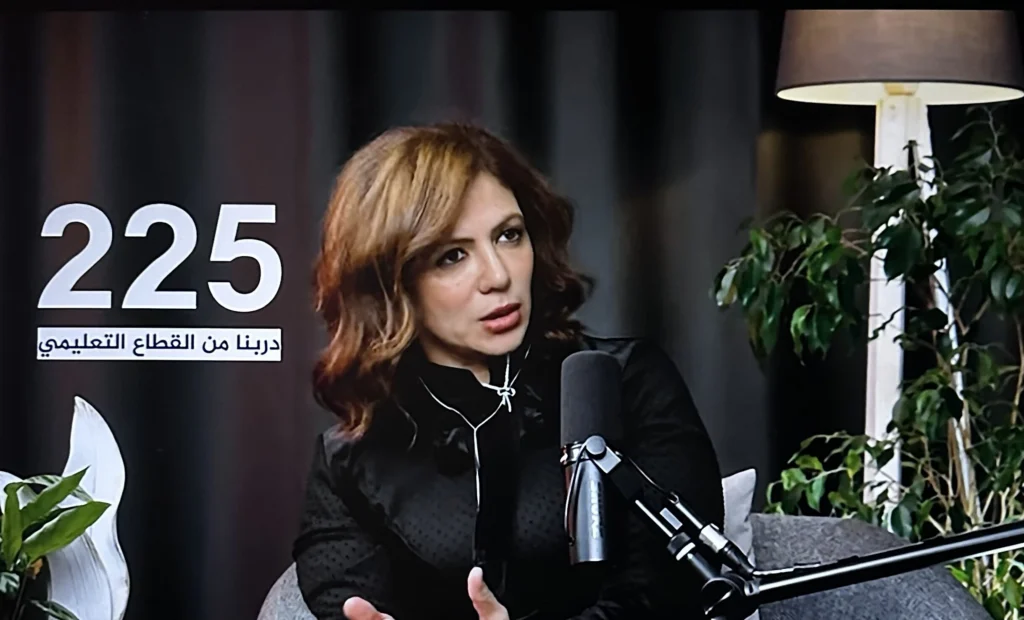
Lead Trainer for the Program
Dr. Mayada Elsabah
A specialist in child psychology, applied behavior analysis, and professional training and supervision, with experience training professionals and working with children and families in a range of educational and community settings.
Her training focuses on taking trainees from understanding concepts to assessment, analysis, intervention design, and professional decision-making.
Founder & CEO – ABA4Change Academy
PsyD in Child Psychology
- PsyD
- QBA
- IBA
- BCCS
Why ABA4Change?
Advanced training that connects concepts with assessment, analysis, and decisions
01
Advanced learning in Arabic
Clear teaching in Arabic, keeping the professional terminology and references in English.
02
Applied learning
We don’t focus on memorizing definitions, but on using knowledge in assessment, analysis, intervention design, and professional decision-making
03
Real cases
Applications in case conceptualization, FBA, data analysis, and designing intervention plans
04
Flexibility
Recorded learning + live sessions.
05
Professional Supervision
Training that helps you develop your skills in documentation, supervision, professional reasoning, and preparing for the QBA® requirements.
06
Exam preparation
Practice in analysis, application, and solving professional scenarios, not just memorization.
Learn in Arabic… and work in the language of the field:
Clear teaching in Arabic, with professional terminology and references in English, so you can move easily from learning to using research, assessment tools, QABA forms, and professional communication.
Fees
Start Your Journey Toward QBA®
QBA 270-Hour Program
$999 $1,199Original price 30% now, and the remaining $699.30 in two monthly installments ($349.65 per month)
Training only, for those who have a supervisor or employer for completing fieldwork.
- 270 training hours: recorded content + live sessions
- Case studies, data analysis exercises, and FBA practice
- Ethics scenarios and applied assignments
- Quizzes after each unit and mock exams
- A 270-hour certificate of completion from ABA4Change
From study to advanced professional practice
QBA Professional Path
$3,499 30% now, and the remaining $2,449.30 in two monthly installments ($1,224.65 per month)
270 training hours + a structured professional supervision pathway.
- Everything in the 270-Hour Program
- An individual plan for organizing fieldwork hours
- Supervision according to current QABA requirements (individual, and group where appropriate)
- Reviewing cases, FBAs, and reports
- Documentation follow-up and support with supervision forms
- Final exam preparation and ongoing career guidance
Already completed part of your fieldwork or supervision? Talk to us to review your plan before you register
What the fees don’t include: the application and exam fees charged by the QABA board, which are paid directly to the board according to its policies in force at the time of application. Completing the program does not guarantee obtaining the credential.
We accept online payment





A full refund is available within 24 hours of attending the first session if you find the program isn’t right for you, in line with our Refund Policy. All purchases are subject to the Terms & Conditions. All payments are processed securely through Amazon Payment Services.
Frequently Asked Questions
Your questions, answered
Is the 270-hour program alone enough to obtain QBA?
No. It’s one of the requirements for obtaining the credential; you must also meet the academic qualification, fieldwork, supervision, exam, and the other QABA requirements.
Do I need a master’s degree?
Yes, the QBA credential is a master’s-level pathway, and applicants must meet the qualification requirements set by QABA.
What’s the difference between the two paths?
Path One – QBA® 270-Hour Program
Includes the full 270 hours of training, learning materials, practical applications, quizzes, and QBA® exam preparation. It’s suited to those who already have a supervisor or employer through whom they can complete the fieldwork and supervision requirements.
Path Two – QBA® Professional Path
Includes everything in Path One, plus an individual fieldwork plan, professional supervision according to QABA requirements, case review, data analysis, FBA review, documentation, and support for your professional development throughout the fieldwork pathway
Show all questions (11 questions)
Can I start fieldwork while studying the program?
Yes, you can start accumulating fieldwork hours once you’ve started the qualifying course sequence, in line with current QABA requirements.
Hours, supervision, and documentation must be organized correctly from the start so they count toward the pathway requirements
Are all 2,000 hours direct work with children?
No. The pathway must include a large proportion of advanced behavior analyst tasks, such as assessment, data analysis, program design, training families and staff, and supervision.
Is 100 supervision hours a fixed number?
No, it’s not a separate fixed number.
QABA requires supervision equal to 5% of the fieldwork hours logged in each supervision period.
So when you complete 2,000 fieldwork hours, total supervision may reach about 100 hours, but the actual number depends on the hours logged and how they are distributed across supervision periods.
Can supervision be in a group?
Yes, supervision can include group sessions within the limits allowed by QABA requirements, but you can’t rely on group supervision alone throughout the pathway.
The supervision plan must also include individual supervision according to the percentages and requirements approved by QABA.
What does the Professional Path price ($3,499) include?
The Professional Path costs $3,499 and includes the 270-hour program and the professional supervision pathway during fieldwork, as described in the package. If you’ve already completed part of your fieldwork or supervision, contact us to review your plan before you register.
Who awards the QBA credential?
The QABA board is the body that awards the QBA® credential once all credential requirements are met. ABA4Change provides the training and the educational and supervisory services described in the chosen path.
Are QABA fees included in the price?
No. ABA4Change’s training fees are separate from the application and exam fees the candidate pays to the QABA board. Check the board’s official website for up-to-date fees at the time of application.
Are there installment payment options?
Yes. You can pay once or in 3 installments: 30% at registration, then 35% after one month, and 35% after two months. Choose “3 installments” in the Fees section.
Start Your Journey Toward QBA®
Path One: 270 training hours – $999 instead of $1,199. Path Two: training + the professional supervision path – $3,499.
QBA® and QABA® are marks and/or credentials associated with the Qualified Applied Behavior Analysis Credentialing Board. Completing the ABA4Change program does not guarantee obtaining the credential. QABA’s official requirements and fees should be checked before enrolling and applying, as regulations may change over time. ABA4Change’s fees do not include the application and exam fees charged by the QABA board.
Official references (September 2026): QABA – QBA® Credential · QBA Candidate Handbook